Storage Dedicated Servers

Explore Our Dedicated Server Options

Loading Storage servers...

Unlocking Massive Capacity: The Power of Storage Dedicated Servers

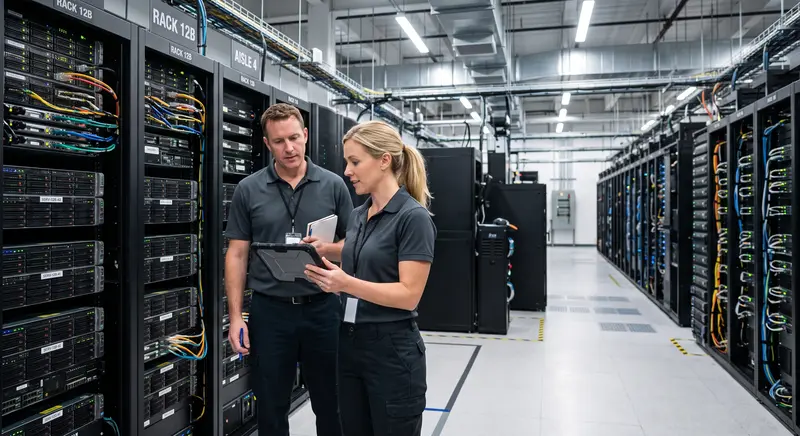
High speed servers in Data Center

A storage dedicated server is a powerful physical server built specifically to hold massive amounts of data. While standard servers focus mainly on processing power, high-capacity storage servers prioritize hard drive space and data safety.

When you choose dedicated storage hosting, you get the entire server to yourself. This means no sharing resources with other users, ensuring maximum privacy and top speeds. Whether you are building an archive of company files, running enterprise data hosting, or setting up secure server backups, these servers provide the massive storage space your growing business needs without slowing down.

Top Use Cases for High-Capacity Storage Servers

Here is how businesses use our high-capacity storage servers:

Secure Server Backups

Secure Server Backups

Protect your business from data loss and ransomware. Use massive storage drives to keep daily, weekly, and monthly backups safe and accessible.

Big Data Hosting & Analytics

Big Data Hosting & Analytics

When analyzing millions of data points, you need a place to store them. Our servers handle large databases smoothly so your analytics tools can run without crashing.

Media & Video Streaming

Media & Video Streaming

High-definition video files take up enormous amounts of space. Storage servers let you host and stream videos, podcasts, and heavy media files to your users globally.

File Archiving

File Archiving

Need to keep years of legal documents, emails, or company records? A storage dedicated server is the most cost-effective way to safely store old files you don't need every day but must keep.

Protect Your Data with Advanced RAID Configurations

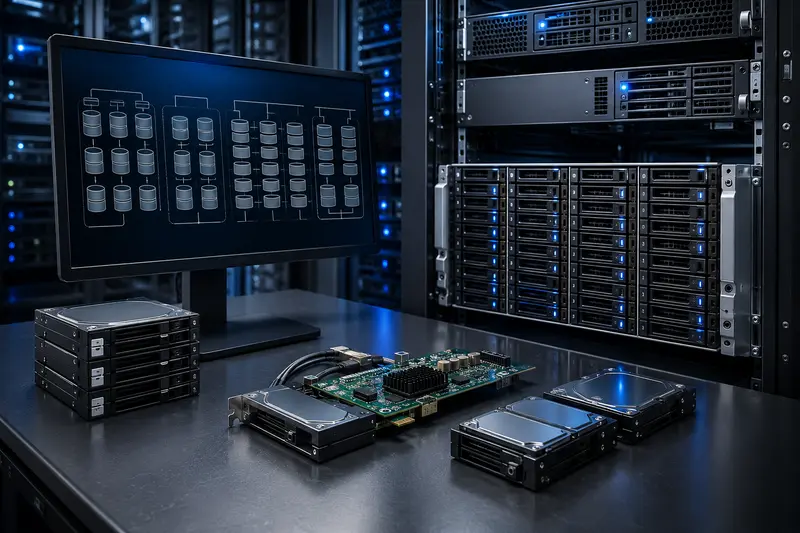
When managing secure server backups or large databases, you cannot afford to lose data if a hard drive fails. That is why CTCservers offers a full range of RAID (Redundant Array of Independent Disks) configurations. RAID combines multiple drives into a single massive storage pool, typically protecting your files by mirroring data or adding parity to ensure uptime. We give you complete control over how your storage dedicated server handles data redundancy. We offer reliable software RAID standard on all systems, along with advanced hardware-level solutions available for selected servers.

Hardware RAID (Levels 5, 6, 10, & 60)

For maximum performance and enterprise data hosting, we recommend Hardware RAID. Your server uses a dedicated controller card with its own memory to process data. This means your main CPU isn't slowed down by calculating data redundancy, giving you ultra-fast read/write speeds.

  • RAID 5 & 6: Perfect for massive media libraries where you need high capacity with safety.
  • RAID 10: The gold standard for active databases, combining the blistering speed of striping with the ultimate safety of mirroring.
  • RAID 60: Ideal for large-scale databases and virtualization, blending the speed of striping with the robust double-parity protection of RAID 6.
Server RAID Configuration

Software RAID (Levels 0, 1, & 10)

Managed directly by your server's operating system, Software RAID is a cost-effective way to secure your data without needing extra hardware components.

  • RAID 0: Maximizes speed and total capacity (no redundancy).
  • RAID 1: Creates an exact mirror of your drive if one fails, the other keeps your server online perfectly.
  • RAID 10: Blends speed and mirroring for solid everyday performance.

HDD vs. SSD vs. NVMe: Which Drive Do You Need?

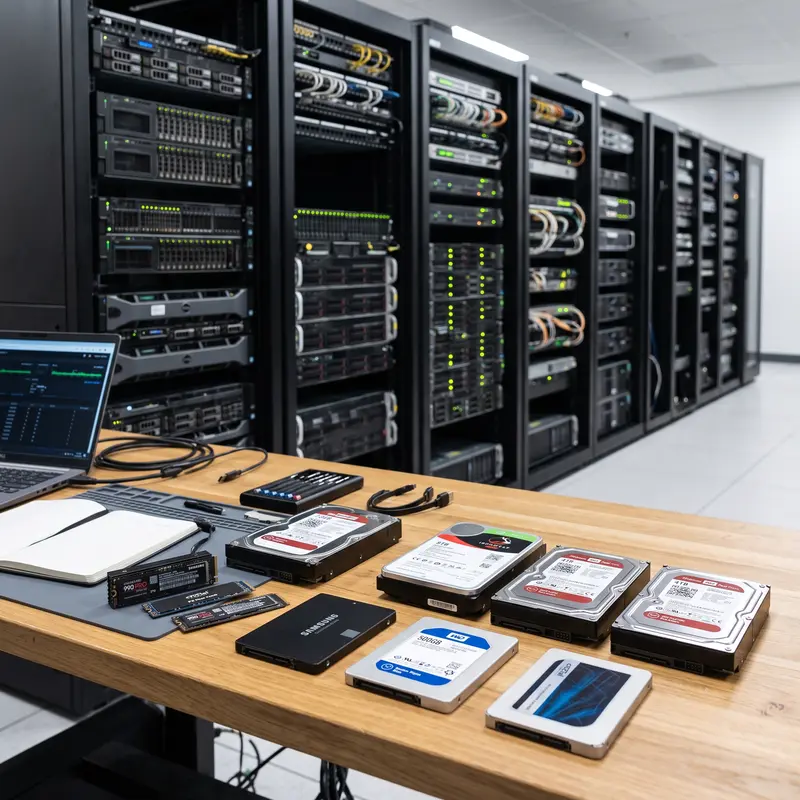
Getting the right type of drive is crucial for your server's performance. Here is a simple guide to our storage options to help you make the best choice for your infrastructure.

Server storage options comparison

HDD Storage Servers (Hard Disk Drives)

The best choice for massive capacity on a budget. Perfect for secure server backups, file archiving, and storing data you don't need to access instantly.

SSD Servers
(Solid State Drives)

Much faster than traditional HDDs. SSDs are great for active databases, hosting websites, and general enterprise data hosting where speed matters.

NVMe Dedicated Servers

The fastest storage technology available today. NVMe drives connect directly to the server's motherboard, making them ideal for intense big data hosting, high-traffic apps, and real-time processing.

Key Features of Our Storage Hosting

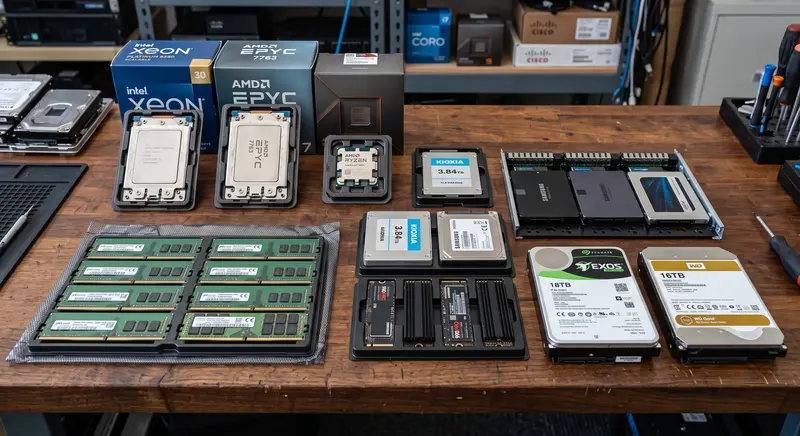
Host your data securely with CTCservers' high-speed 1Gbps and 10Gbps unmetered networks, global data centers, and custom RAID configurations designed to prevent data loss. Our enterprise-grade infrastructure scales effortlessly to meet your specific workload needs. For balanced hybrid storage, our systems feature the Intel Xeon Silver 4116 processor with 128GB DDR4 RAM, 48TB of SATA storage, and a fast 1.92TB NVMe cache. Growing businesses can rely on our mid-tier setups powered by an AMD Ryzen 7 3700 processor, 64GB DDR4 RAM, 64TB of bulk HDD space, and 960GB of responsive SSD storage. If you need to build a massive data lake, our high-density nodes utilize dual Intel Xeon E5-2690 v4 processors and 128GB DDR4 RAM to manage an incredible 672TB of raw SAS storage. Finally, for heavy compute and real-time analytics, our intensive workload nodes combine a modern Intel Xeon 6521P processor and cutting-edge 128GB DDR5 RAM with 168TB of HDD capacity and 1.92TB of dedicated SSD storage.

View Server Plans
 Data Center Servers

Frequently Asked Questions

A storage dedicated server is a physical machine built specifically to hold massive amounts of data. Unlike standard servers that focus mostly on processing speed, these servers are packed with multiple high-capacity drives. Because it is 100% dedicated, you get total control over the server and never share your storage space or hardware with anyone else.

These servers are designed for heavy data lifting. Businesses rely on them for enterprise data backups, disaster recovery, archiving historical records, running private file-sharing platforms (like Nextcloud), and hosting large media libraries for video streaming.

It depends on your primary goal. HDDs (Hard Disk Drives) are more affordable and offer massive capacity, making them perfect for large backups and long-term archiving where speed is a lower priority. NVMe SSDs are significantly faster and are the better choice if you need instant data access, such as for active databases or high-traffic media streaming.

RAID (Redundant Array of Independent Disks) is a technology that links multiple hard drives together to work as a team. It is essential for any storage server because it creates data redundancy. If one hard drive physically fails, RAID ensures your data survives on the remaining drives, preventing catastrophic data loss.

Continuous access to your data is critical, which is why our storage servers are housed in enterprise-grade data centers backed by a 99.99% network uptime guarantee. We utilize redundant power connections, backup generators, and multiple premium network carriers to ensure your machine stays online. Whether you are running nightly backups or streaming media around the clock, you can rely on maximum availability and stability for your data.

With commercial cloud storage, you share space on a massive public network and often pay hidden fees every time you transfer data out. A storage dedicated server gives you the entire physical machine for a flat monthly rate. This provides better data privacy, full control, and much lower long-term costs when hosting terabytes of data.

Moving large amounts of data requires a fast and stable connection. For daily backups and standard archiving, a 1Gbps unmetered port is usually plenty. However, if hundreds of users are downloading massive files at the same time, upgrading to a 10Gbps uplink will prevent your network from slowing down.

Yes. We understand that your data will grow over time. Many of our storage servers feature extra drive bays, allowing you to seamlessly scale up your capacity by adding new drives without the hassle of migrating to a brand-new machine.

Because you get full root and administrator access, you can install exactly what your project needs. Most users choose reliable Linux distributions (like Ubuntu, Debian, or AlmaLinux). You can also install Windows Server or specialized storage operating systems to manage your files easily.

Your data is highly secure. Because the server belongs only to you, there are no shared vulnerabilities from other users on the same machine. Combined with enterprise-grade data center physical security, RAID data redundancy, and your own software firewalls, your sensitive data remains fully protected.