The Future of Server Management
Modern web hosting and application deployment require absolute speed, flexibility, and efficiency. Server virtualization and containerization have quickly evolved to meet these demands seamlessly, allowing businesses to scale faster than ever before.
What is LXC (Linux Containers)?
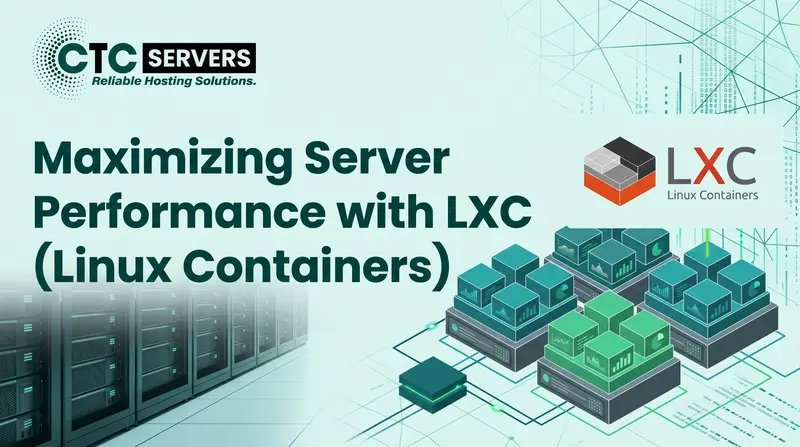
LXC is a well-known Linux container runtime that serves as a userspace interface for the Linux kernel containment features. Through a powerful API and simple tools, it allows Linux users to easily create and manage system or application containers. Instead of simulating hardware and running a separate kernel like traditional Virtual Machines (VMs), LXC shares the host system's kernel. This makes LXC containers function as something in the middle between a simple chroot and a full-fledged virtual machine, offering an environment that is as close as possible to a standard Linux installation.
The primary goal of LXC is to deliver a distro-neutral and vendor-neutral environment for running applications with practically zero overhead. It relies on advanced kernel features, such as namespaces (ipc, uts, mount, pid, network, and user), CGroups (control groups), Apparmor and SELinux profiles, and Seccomp policies to securely isolate processes. By doing so, LXC offers exceptional flexibility and performance, making it the perfect low-level tool for scaling up web applications, managing databases, and maximizing the capabilities of your hosting environment.
Core Components of LXC
1 The liblxc Library
The foundational C library that powers LXC, providing the core API for container creation and management.
2 Language Bindings
LXC supports several programming language bindings for its API, including Python3, Lua, Go, Ruby, and Haskell.
3 Standard Tools
A comprehensive set of built-in command-line tools designed to help you easily control and configure your containers.
4 Distribution Templates
Ready-to-use distribution container templates that simplify the rapid deployment of various Linux distributions.
5 Kernel Namespaces
Utilizes kernel namespaces to provide secure, robust isolation for networks, mount points, users, and process IDs.
6 CGroups (Control Groups)
Ensures highly efficient resource management by allocating, prioritizing, and monitoring system resources like CPU and RAM.
How LXC Differs from Virtual Machines
When comparing server virtualization methods, the distinction between hardware virtualization (VMs) and operating system-level virtualization (containers) is crucial. Virtual machines supply a complete environment by simulating all the hardware and running a separate, fully independent operating system kernel. This approach, while highly isolated, consumes a significant amount of system memory, storage space, and CPU cycles just to keep the guest operating systems running.
In contrast, system containers like LXC offer an environment almost identical to what you would get from a VM, but without the massive performance overhead. Because LXC containers share the host server's kernel and do not need to simulate physical hardware, they boot up almost instantly and consume a fraction of the resources. This lightweight architecture allows server administrators to run densely packed, highly efficient workloads on a single bare-metal server.
A Quick Comparison
Understanding the technical differences can help you make the best choice for your server infrastructure. Here is a brief look at how LXC stacks up against traditional Virtual Machines.
| Feature |
LXC (Linux Containers) |
Traditional VMs |
| Kernel |
Shares the host kernel |
Runs a separate, isolated kernel |
| Hardware Simulation |
No hardware simulation needed |
Simulates physical hardware layers |
| Performance Overhead |
Extremely low overhead |
High resource overhead |
| Boot Time |
Almost instantaneous |
Slower, requires an OS boot sequence |
| Resource Efficiency |
Very high (allows dense container packing) |
Lower (each VM needs dedicated RAM/CPU) |
Key Benefits of Using LXC
Deploying LXC on your infrastructure brings numerous advantages for server administrators and developers alike.
- High Performance: Enjoy near bare-metal server speeds since there is no heavy hypervisor layer slowing down your applications.
- Advanced Security: Benefit from robust security features like Apparmor, SELinux profiles, and Seccomp policies to contain processes safely.
- Ultimate Flexibility: Provides a very flexible, low-level architecture that covers almost every containment feature supported by the upstream Linux kernel.
- Open Source Reliability: Maintained as free software under licenses like GNU LGPLv2.1+, with extended Long Term Support (LTS) available for stable major releases.
Integrating LXC into Your Workflow
Integrating LXC into your daily server operations is a straightforward process thanks to its flexible nature and robust API. System administrators can utilize accompanying projects like distrobuilder, a modern image-building tool that supports complex image definitions as simple YAML documents, to create custom container images. Additionally, LXC is part of a broader ecosystem supported by linuxcontainers.org, ensuring continuous updates, long-term support for major releases, and an active open-source community dedicated to container technology.
Because LXC behaves so similarly to a standard Linux installation, you can install, configure, and troubleshoot software exactly as you would on a physical server. Your existing deployment scripts, configuration management tools, and backup routines will often work right out of the box with minimal adjustments. This ease of use dramatically reduces the learning curve and allows IT teams to rapidly deploy scalable, highly optimized containerized environments.
Experience the Dedicated servers at CTCservers
To truly unlock the power of Linux Containers, you need a hosting foundation that offers raw performance, uncompromised stability, and complete control. At CTCservers, we provide top-tier bare-metal dedicated servers that are perfectly suited for running resource-intensive LXC container environments. Our premium hardware ensures that you have the robust CPU power, massive RAM, and rapid storage required to host dozens of system containers simultaneously without experiencing any bottlenecks.
Choosing our dedicated servers means you get full root access, premium network routing, and the freedom to configure your operating system exactly to your project's specifications. Whether you are building a vast network of isolated development environments, hosting high-traffic web applications, or consolidating legacy systems, our infrastructure provides the rock-solid reliability you need to keep your business running smoothly around the clock.
- Enterprise-Grade Hardware: High-performance processors and rapid SSD/NVMe storage options built for demanding workloads.
- Complete Control: Full root access to configure your host kernel, install LXC, and completely optimize your network settings.
- Unmatched Uptime: Reliable network connectivity and robust backend infrastructure to keep your containers online 24/7.
Don't let sluggish infrastructure hold back your true potential. By combining the lightweight, lightning-fast architecture of Linux Containers with the sheer computing power of our premium dedicated hardware, you can achieve unprecedented levels of server efficiency and application performance.
Are you ready to upgrade with CTCservers?
Take your server performance to the next level by deploying your containerized applications on our powerful, highly secure bare-metal solutions today.